What does the National Labor Relations Board (NLRB) do?
The National Labor Relations Board (NLRB) is an independent executive branch agency responsible for safeguarding employees’ rights to unionize and preventing unfair labor practices. Its functions include conducting union elections, investigating charges of unfair practices, deciding cases, and enforcing punishment. It was established in 1935.
$310M
<0.1%
How much does the National Labor Relations Board spend?
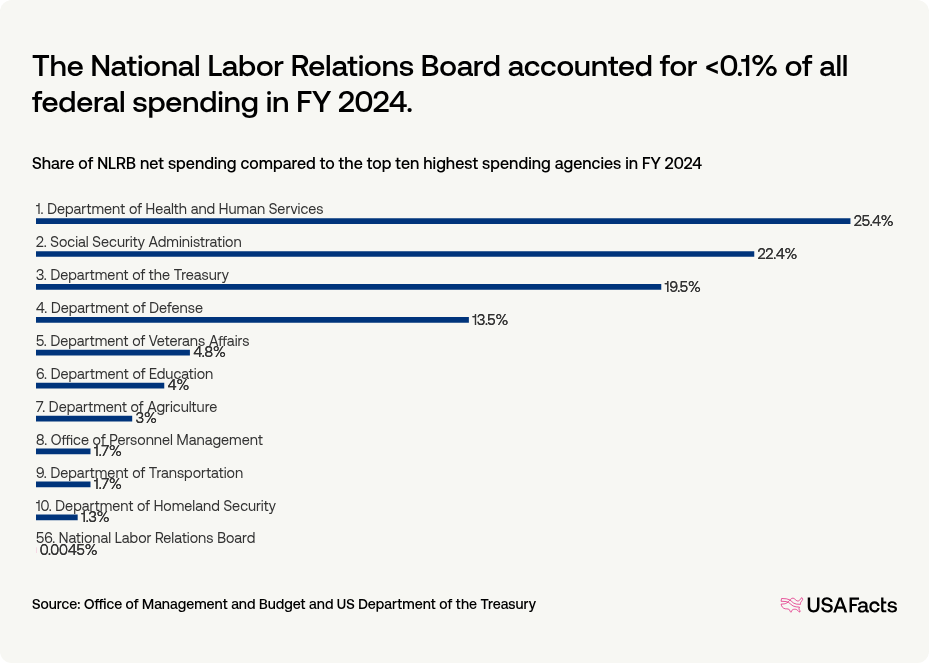
The National Labor Relations Board accounted for <0.1% of all federal spending in FY 2025.
Share of NLRB net spending compared to the top ten highest spending agencies in FY 2025
Get weekly insights
Subscribe for data-driven insights. No spin, just the facts.
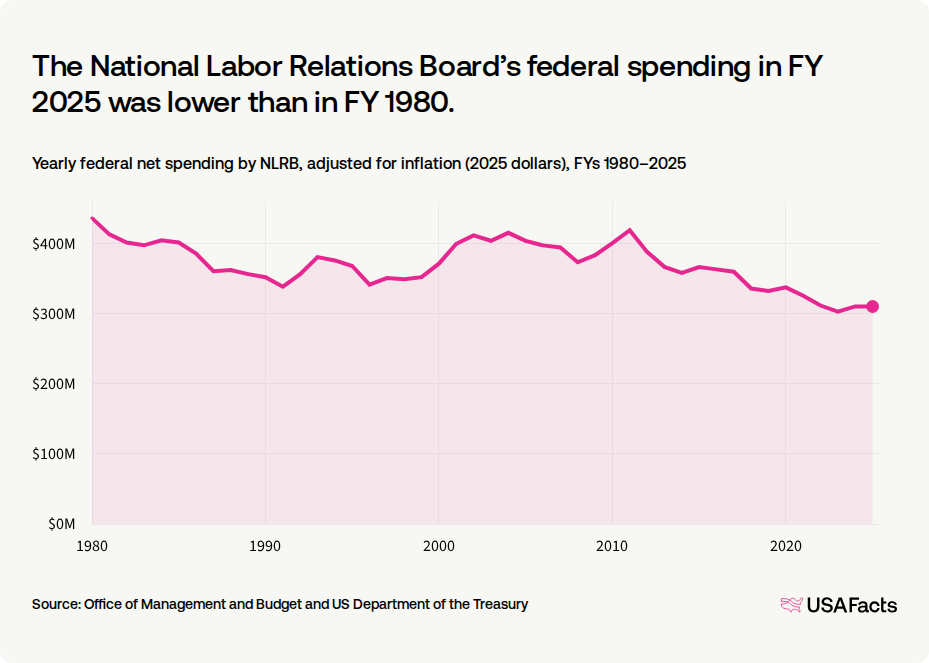
The National Labor Relations Board’s federal spending in FY 2025 was lower than in FY 1980.
Yearly federal net spending by NLRB, adjusted for inflation (2025 dollars), FYs 1980–2025
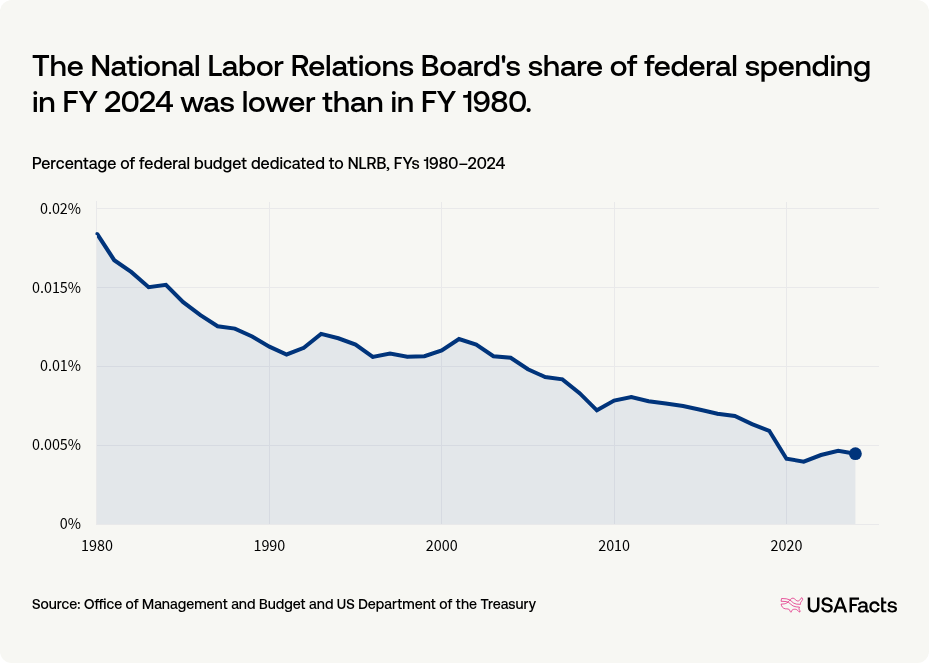
The National Labor Relations Board's share of federal spending in FY 2025 was lower than in FY 1980.
Percentage of federal budget dedicated to NLRB, FYs 1980–2025
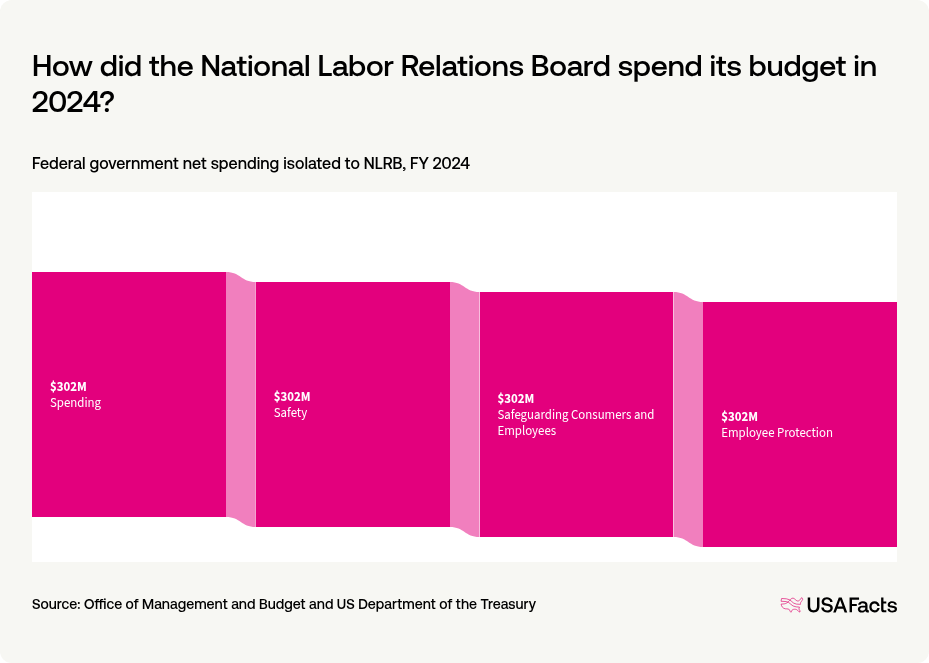
How did the National Labor Relations Board spend its budget in 2025?
Federal government net spending isolated to NLRB, FY 2025
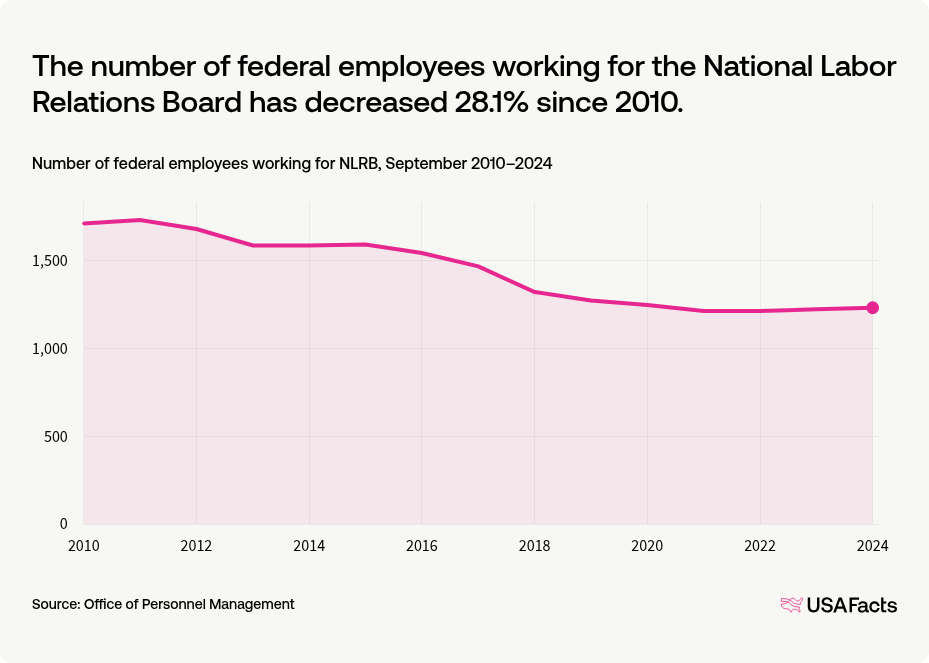
How many people work for the National Labor Relations Board?
The number of federal employees working for the National Labor Relations Board has decreased 36.7% since 2012.
Number of federal employees working for NLRB, May 2012–2026
Who leads the National Labor Relations Board?
The NLRB is led by a chairman and a general counsel known as "the board." The chairman oversees the board’s adjudicative functions, while the general counsel is responsible for the investigation and prosecution of unfair labor practice cases. Both the chairman and the general counsel are appointed by the president and confirmed by the Senate. Board member terms are five years.
Keep exploring

Methodology
USAFacts standardizes data, in areas such as time and demographics, to make it easier to understand and compare.
Page sources
USAFacts endeavors to share the most up-to-date information available. We sourced the data on this page directly from government agencies; however, the intervals at which agencies publish updated data vary.

