How many people in Alaska speak a language other than English at home?
Refreshed annually
In 2024, about 98,400 people age 5 and older in Alaska spoke a language other than English at home. That's about one in 7 Alaskans. Excluding English, Other Native languages of North America is the most common language spoken in Alaska homes. About 25.4% of people speaking a non-English language spoke Other Native languages of North America.
98.4K
people speak a language other than English at home (2024)
25.4%
Other Native languages of North America's share of non-English language speakers (2020–2024)
More than half of all people in Alaska speaking a non-English language at home spoke one of three languages: Other Native languages of North America, Spanish, or Tagalog (incl. Filipino).
Other Native languages of North America is the most-spoken non-English language in Alaska homes, followed by Spanish and Tagalog (incl. Filipino).
People aged 5 or older who speak a language other than English at home, by language group (2020-2024)

The ACS asks people if they speak a language other than English at home, what that language is, and how well they speak English. In Alaska in 2024, 98,400 people age 5 and older spoke a language other than English at home, or 14.2% of the population age 5 and older, compared with 23% nationally; Alaska had 40 languages spoken, and the most common were Other Native languages of North America (25,000 speakers), Spanish (22,400), and Tagalog (incl. Filipino) (17,400). This data determines bilingual election requirements under the Voting Rights Act and has also been used to allocate funds for students with lower English proficiency.
Based on data from 2024, Alaska's residents were less likely to speak a non-English language at home than the population nationwide. While about 0.22% of the US's 5+ population lived in Alaska, the state was home to 0.13% of the nation's non-English speakers — a sign that Alaska had a disproportionately smaller share of non-English households.
The non-English languages most concentrated in Alaska were Other Native languages of North America (14.9% of all US speakers), Ilocano, Samoan, Hawaiian, or other Austronesian languages (1.6%), and Hmong (1.4%).
In Alaska, no non-English language had its largest US-speaking population in the state. Other Native languages of North America was the language for which Alaska accounted for the largest share of US speakers, at 14.9%.
Get weekly insights
Subscribe for data-driven insights. No spin, just the facts.
Other Native languages of North America is the language for which Alaska makes up the largest share of US speakers
State share of national speakers by language, ages 5 and older (2024)

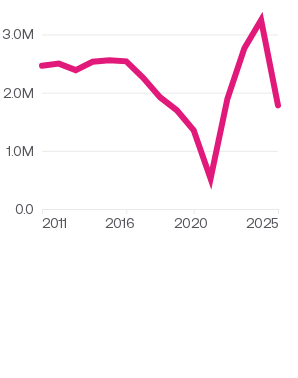
Population change
The US population gained 1.78 million people between 2024 and 2025.
Between 2018 and 2024, the number of people in Alaska whose primary language at home is not English decreased 11.7%. The number of people speaking Asian and Pacific Island languages — the largest of the Census Bureau's four broad language categories in Alaska — shrunk 15.2% during this period.
In Alaska, the number of people speaking Asian and Pacific Island languages at home shrunk 15.2% since 2018
Non-English language speakers ages 5 and older at home, by broad language group

Keep exploring

Methodology
USAFacts standardizes data, in areas such as time and demographics, to make it easier to understand and compare.
Page sources
USAFacts endeavors to share the most up-to-date information available. We sourced the data on this page directly from government agencies; however, the intervals at which agencies publish updated data vary.
