How do federal, state, and local governments split the bill?
In this episode of Just the Facts, Steve Ballmer breaks down how government responsibilities and spending are divided across federal, state, and local governments in the United States, using official government data. With nearly 91,000 government entities nationwide, understanding who does what — and who pays for it — is more complicated than it might seem.
Up Next

Transcript
I'm Steve Ballmer, former Microsoft CEO and a basketball fanatic. But more than anything, I'm a data guy. That's why I created USAFacts, to bring you unbiased and nonpartisan government data on issues impacting the lives of Americans.
I'll share with you the facts and data, all from our government. You make up your own mind. In this episode of Just the Facts, who is responsible, federal, state, or local government? There are 90,888 government entities across America.
Woo! I sure didn't know that before we started. I wondered, how is that even possible? What do all those governments do? How much does it all cost? It's our government, so let's explore it. The most recent nationwide data from 2022 tells us we have one federal government representing the whole United States of America, which does turn 250 years old in 2026.
We have 50 state governments, 3,031 counties, 19,491 municipalities, which actually also includes Washington, D.C., 16,214 townships, 12,546 independent school districts, and 39,555 special districts, like public transportation or water and sewer authorities. That adds up to 90,888, a number that does not include U.S. territories like Guam and Puerto Rico, which have their own governing structures. Let's break it down.
County governments exist in every state except Connecticut and Rhode Island, which assign local functions to municipalities, or the state retains those itself. Two states have county-like entities with different names. Louisiana refers to them as parishes, and Alaska calls them boroughs.
Municipal governments are local governments that are often called cities, towns, or villages, depending on the state. Townships are a subdivision of counties. You'll find them in 20 states, primarily in the Northeast and the Midwest.
I grew up in a place called Farmington Township, just outside Detroit. Importantly, townships are not the same as towns, which are small municipalities. Municipal and township governments do overlap in 11 states, where residents can wind up paying taxes to and receiving services from both the township and other local governments.
That covers about 43% of the government entities in America. Now let's look at the remaining 57%, which fall into two categories, independent school districts and special districts. Independent school districts run public elementary and secondary education within specific geographic areas.
We count them as government entities because most, though not all, operate independently of county and municipal governments. Finally, we have something called special districts, which typically govern a specific type of government service, such as hospitals, electric utilities, garbage collection, industrial districts, and, my favorite, mosquito abatement. Across America, people are subject to the jurisdiction of multiple governments simultaneously.
For example, if you live right here, the geographic center of the continental U.S., you are, at a minimum, under the jurisdiction of the city of Lebanon, the Lebanon Rural Fire Protection District, Smith County, the Smith Center Unified School District, the state of Kansas, and the federal government. That's a lot. Now let's follow the money.
Total government spending was $8.9 trillion in 2023. The most recent year for which data is available for combined federal, state, and local outlays. The federal government spent $5.1 trillion directly and sent another $1.1 trillion to state and local governments for programs that are operated at the state level.
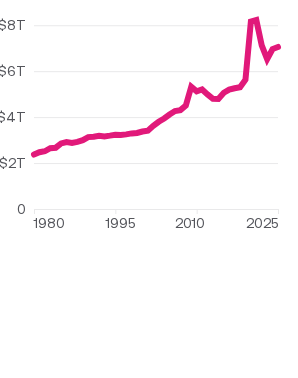
State governments spent $2 trillion, and local governments spent $1.9 trillion. Both of those numbers include the transfers that they got from the federal government. Some major categories, such as Social Security, Medicare, National Defense, veterans, foreign aid, the interest on the federal debt, are the responsibility of the federal government.
43% of the combined government spending, to be exact. But let's focus on our state and local governments, and where their work and costs are shared with that of the federal government. Over the last decade, 19% of all government spending, federal, state, and local, was to support individuals in need, meaning those with incomes below certain thresholds, people with disabilities, who are unemployed, and older adults in some instances.

Examples include Medicaid, Section 8 housing vouchers, other housing assistance programs, and SNAP, commonly known as food stamps. 15% of spending went to education, 4% for transportation and infrastructure, 4% for the criminal justice system, and 3% for public health. Governments also have several smaller expenditures that make up 12% of spending, including agriculture, environmental protection, parks, election administration, and subsidies for some government-owned businesses like the Tennessee Valley Authority, Post Office, the Washington State Ferries where I live.
To better understand which government entity does what, we had to play detective a bit and combine federal government data from the White House's Office of Management and Budget and state and local government data, which actually gets collected by the Federal Census Bureau. Let's start with the 19% of government spending that supports individuals in need, 83% of which is funded by the federal government. Nearly half of those dollars are federal transfers to the state, primarily for Medicaid, the health insurance program for low-income individuals, which is actually run by the states.
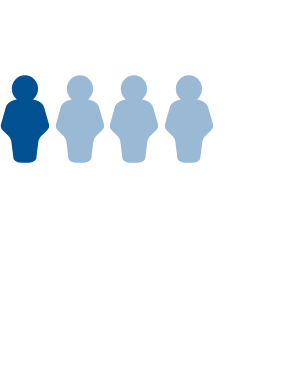
States voluntarily choose to participate in Medicaid, and all of them currently do. The federal government reimburses each state for a portion of its Medicaid costs. The lower a state's per capita income, the more Medicaid costs the federal government winds up assuming.
In 2025, 10 states received 50%, and that's the lowest possible match. The maximum possible match from the federal government is 83%, although no state received that much. The highest rate in 2025 was in Mississippi, which got 76.9% of its Medicaid dollars from the federal government.
Federal law mandates that states with Medicaid offer coverage for low-income families with dependent children, pregnant women, and qualified low-income individuals over 65, or folks who are disabled. Think of this as the coverage floor. States have additional latitude in who they cover, what they cover, and how they administer their programs.
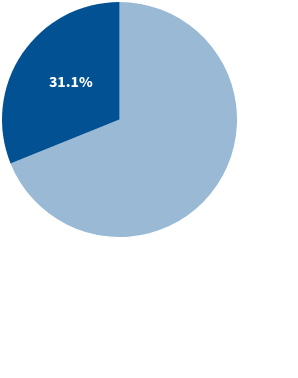
There's a great variation in the income levels at which Medicaid support starts. Some states have traditionally covered a broader population than the federal Medicaid law mandates. There's really has been a quite wide variation in the income levels at which people receive Medicaid in various states.
And to that, in addition, under the Affordable Care Act passed in 2010, states have the option to expand their Medicaid populations to cover qualified low-income adults under 65 without dependent children. That was a new space for Medicaid. All but 10 states have chosen to expand their programs, and the federal government pays for 90% of the expanded coverage in these states.
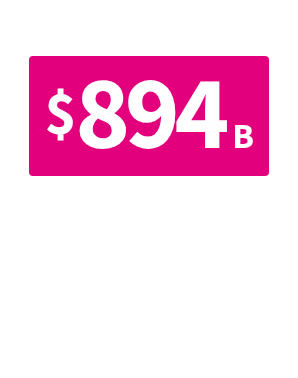
For more on how Medicaid works, and who is eligible, and upcoming changes from recent legislation, watch our series, Do You Qualify? A look at government support in America. So again, federal funding covered 83% of the spending on individuals in need. The other 17% came from state and local governments to fund their share of Medicaid, as well as housing assistance, community development, food stamps, which states also have to provide support, and other programs.
That brings me to the next biggest category of joint government spending, which is education at 15%. It may surprise you to know that only 10% of all education spending comes from the federal government, much smaller than you might think from the way politicians at the federal government discuss the topic. That money is mostly allocated for K-12 school lunches for low-income families, support for children with disabilities, and Title I spending, which provides additional funds to schools or school districts with high percentages of low-income families.
The remaining 90% of education spending is paid for by state and local governments. The mix of that varies by state. Most states establish a target minimum level of funding per student.
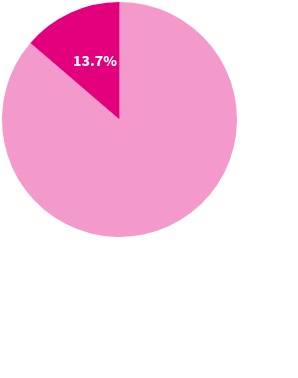
Property taxes are the primary source of school funding. In many states, money raised is distributed in such a way that poorer districts end up with similar amounts per student as wealthier districts. In some states, all of the money that is raised in a district stays and is spent in that district.
In some other instances, there's also funding based upon the number of students with specific needs, such as disabilities or low English proficiency. Additionally, in some states, districts are free to raise additional funds beyond the minimum set by the state. There are some states, however, that fund their schools almost entirely at the state level, as is true in Hawaii.
This is all very complicated. As for higher education, states kick in about 21%. And the federal government provides 18%, mostly through Pell Grants.
The remaining 60% comes from other sources, such as tuition, grants from non-government sources, contracts, and other gifts. Higher education institutions also collect revenue that offsets the cost of certain services, like the bookstore or the dorms. And they sometimes operate hospitals that both take in revenue and spend to deliver services, much like a business.
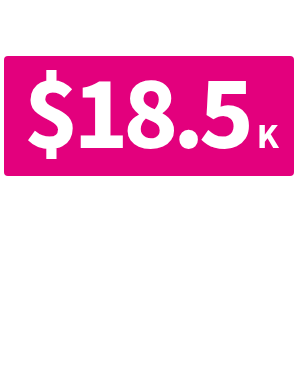
4% of government spending was allocated to transportation and infrastructure. The federal government funds 39% of that, while state and local governments finance the remaining 61%. The actual work is contracted by the relevant government entity.
4% for the criminal justice system. Most of that was funded at the local level. There are six times as many state and local law enforcement officers as federal officers, and 88% of prisoners are actually held in state and local prisons versus federal prisons.
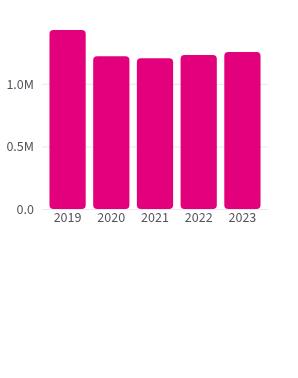
Local governments, like cities and counties, operate jails that are generally for people incarcerated for minor crimes with shorter stays. Prosecutors' offices are generally associated with counties. Public health accounts for 3% of government spending.
44% of that comes from the federal government to support agencies such as the National Institutes of Health, the Centers for Disease Control and Prevention. The other 56% is from state and local governments, primarily to fund state public health departments. Let's close with a look at where government gets its money.
In 2023, the federal government collected $4.6 trillion, the state's $1.4 trillion, and local governments $960 billion. States took in 42% from sales taxes and 38% from income taxes. 10% came from corporate taxes, another 5% from license fees, such as a license to drive a car or run a business, and a final 5% was from other taxes, including property and severance taxes.
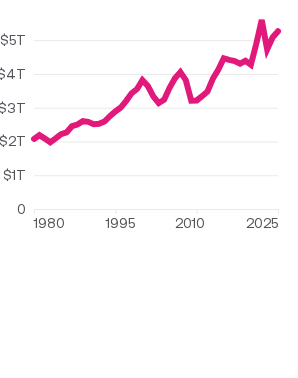
And $1.1 trillion of federal money was transferred to the states. As for local governments, 69% of their revenue came from property taxes paid by homeowners, landlords, and other property owners based on the value of their property. Another 18% was from sales taxes, followed by 5% in income taxes.
The final 8% was severance taxes, licenses, corporate income taxes, and other taxes. State tax rates vary, although nine states have no income tax. Alaska, Florida, Nevada, New Hampshire, South Dakota, Texas, Tennessee, Washington, and Wyoming.
Five states have no sales tax. Alaska, Delaware, Montana, New Hampshire, and Oregon. The highest average rates for property taxes are in New Jersey, Illinois, and Connecticut, while Hawaii, Arizona, and Alabama have the lowest.
Okay, so now let's step back and look at the big picture. Here's a painting that nicely summarizes the relationship between federal, state, and local governments. In other words, it's a set of shared policy and financial ties.
A bit messy? Is it good art? Is it good government? We'll let you decide. You may have noticed discussion about the federal government withholding some funds from state and local governments, and some of that is currently being litigated in court. And the One Big Beautiful Bill Act, signed into law in July of 2025, will shift some financial responsibilities from the federal government to the states as those changes are phased in.
Stay tuned for updates. What's your take on this interconnected system of government? It lies in our Constitution. All powers not explicitly given to the federal government are reserved for the states.
It's messy, but that's our system. At USAFacts, we give you the facts. You make up your own mind.
Just the facts. Okay? One take. Fine.
Page sources and methodology
All of the data on the page was sourced directly from government agencies. The analysis and final review was performed by USAFacts.
Census Bureau
US Geological Survey

