What do rising mortgage rates mean?
Mortgage rates are at a three-year high. What does that mean for homebuyers?
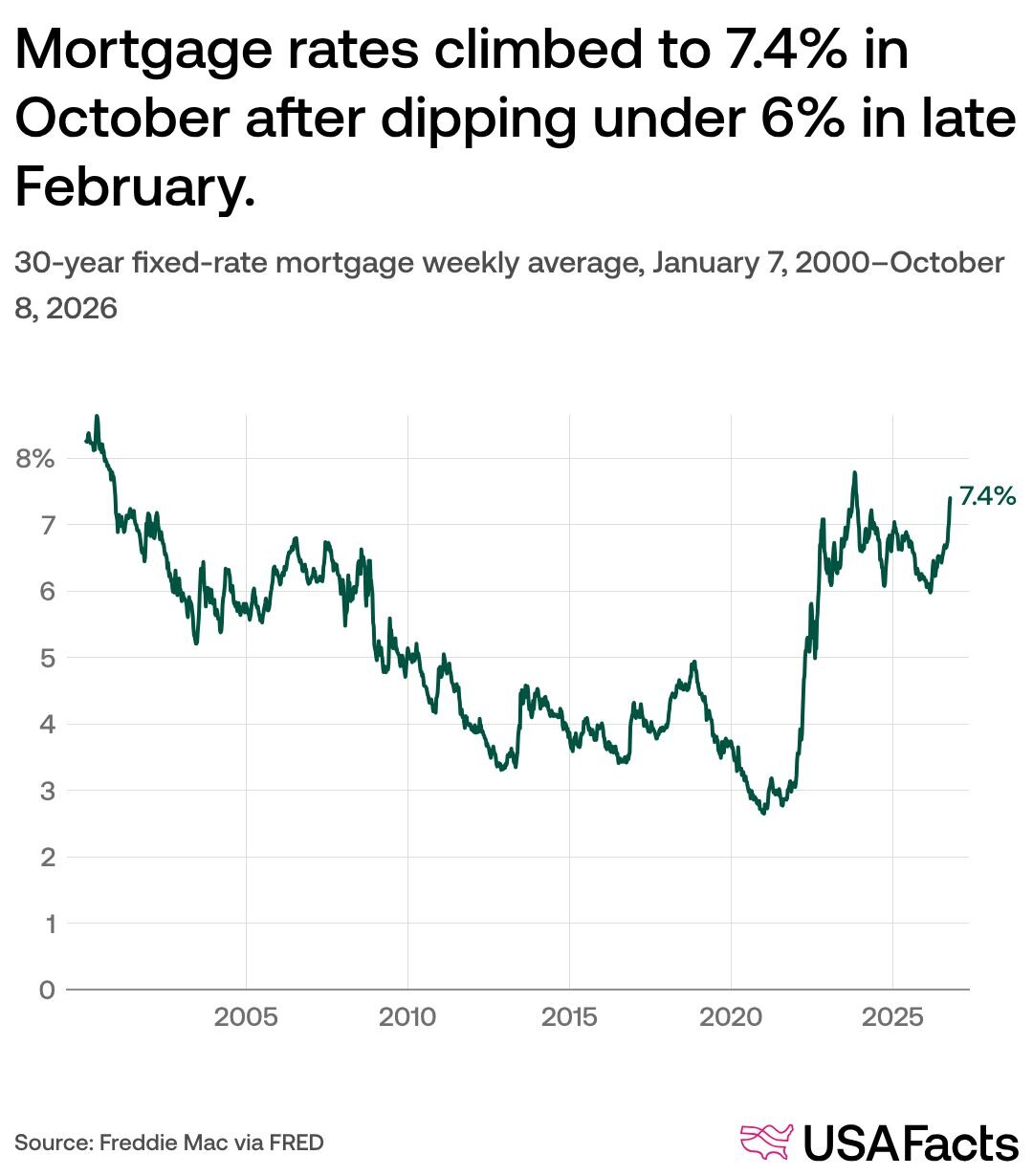
The average interest rate for a 30-year fixed-rate mortgage climbed to 7.4% as of October 8. That’s the highest rate since fall 2023, according to data from Freddie Mac accessed via FRED. Mortgage rates have risen 1.1 percentage points in the last year.
Prior to 2023, the rate hadn’t reached 7.4% since winter 2000.
Rates generally declined through 2025 and into 2026, dipping below 6% as recently as late February. But that buyer relief was short-lived.
Mortgage rates climbed to 7.4% in October after dipping under 6% in late February.
30-year fixed-rate mortgage weekly average, January 7, 2000–October 8, 2026
What do high mortgage rates mean for homebuyers?
In short, it makes buying a home more expensive.
Say you’re in the market for a new home — the national median price for a new house is $410,700. With a 30-year fixed-rate mortgage and, for instance, a 20% down payment, you would owe $2,275 monthly at the current rate. That’s up nearly 12% from the monthly payment on the same loan at last year’s 6.3% rate ($2,034), all before factoring in property tax and home insurance.
Not all monthly payments would increase by that same 12% — that depends on the size and term of the loan.
Get weekly insights
Subscribe for data-driven insights. No spin, just the facts.
Why do mortgage rates go up?
Many factors affect individual mortgage rates, including the buyer’s credit score, location, the size of the buyer’s down payment, and the loan term. But broader trends also impact the average national rate.
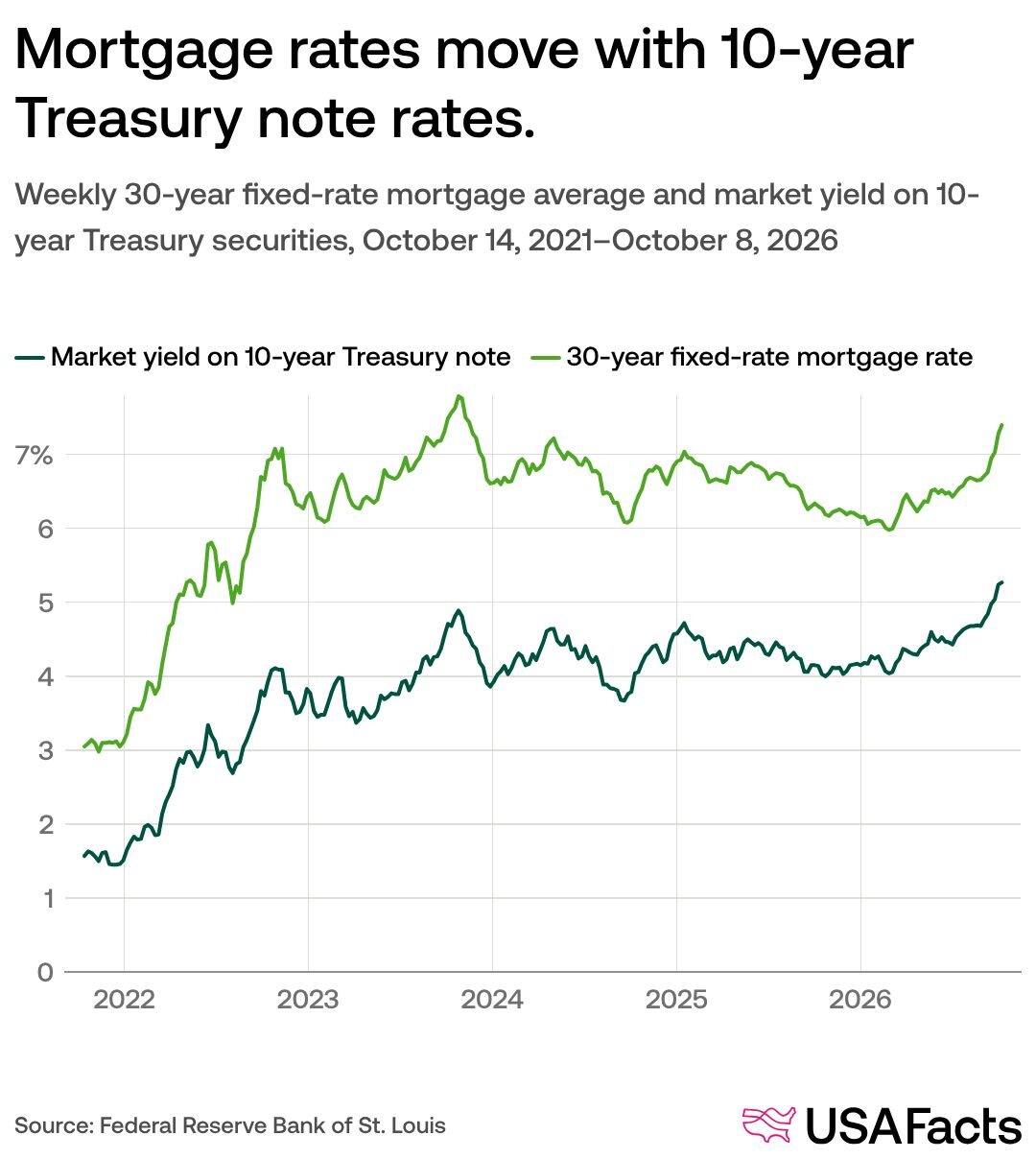
The average mortgage rate tends to move up and down with the interest rates on the 10-year Treasury note, a type of loan issued by (you guessed it) the Treasury with a maturity of 10 years. Interest rates are set based on how investors expect the value to change during that term, given fiscal policy, growth of the national economy, inflation, and other factors. Because mortgages are also longer-term loans, lenders consider similar factors in setting rates.
Federal Reserve interest rate changes don’t impact mortgages directly — but expected Fed monetary policy is one of the things investors consider when investing in 10-year Treasury notes, which in turn impacts mortgage rates.
Mortgage rates move with 10-year Treasury notes.
Weekly 30-year fixed-rate mortgage average and market yield on 10-year Treasury securities, October 14, 2021–October 8, 2026
Keep reading about housing costs and get the data straight to your inbox with our weekly newsletter.

Keep exploring
- What is a yield curve? - Investors pay attention to the direction of the yield curve because it has a history of foreshadowing recessions.
- The state of household debt in the US - US household debt has risen by nearly 50% over the last two decades, after adjusting for inflation.
- What is the Federal Reserve? - Established in 1913, the Federal Reserve serves as the nation’s central bank, directing monetary policy and supporting financial stability.
- Claude Connector - Connect USAFacts to Claude to ask questions about US government data right in your conversation. Start with questions about the economy, including jobs, wages, inflation, and economic growth.
