What is the US poverty rate?
Refreshed annually
The poverty rate was about 10.2% of the US population in 2025, the lowest level since the official poverty measure was created in the 1960s. The poverty rate is the percentage of people whose household income falls below the poverty threshold set by the government. It measures the percentage of people in households that don’t earn enough to pay for basic needs like food, housing, and healthcare. In 2025, 34.5 million people lived in poverty.
10.2%
of the population (2025)
34.5M
people living under the poverty line (2025)
The national poverty rate was first officially recorded in 1959 at 22.4%. It has generally declined since then, with spikes during economic downturns. The last time the rate rose above 15% was in 2010, following the Great Recession. The 2025 rate of 10.2% was a decrease of 0.5 percentage points from the year before.
In 2025, 10.2% of the US population were living under the poverty line.
Poverty rate, 1959–2025

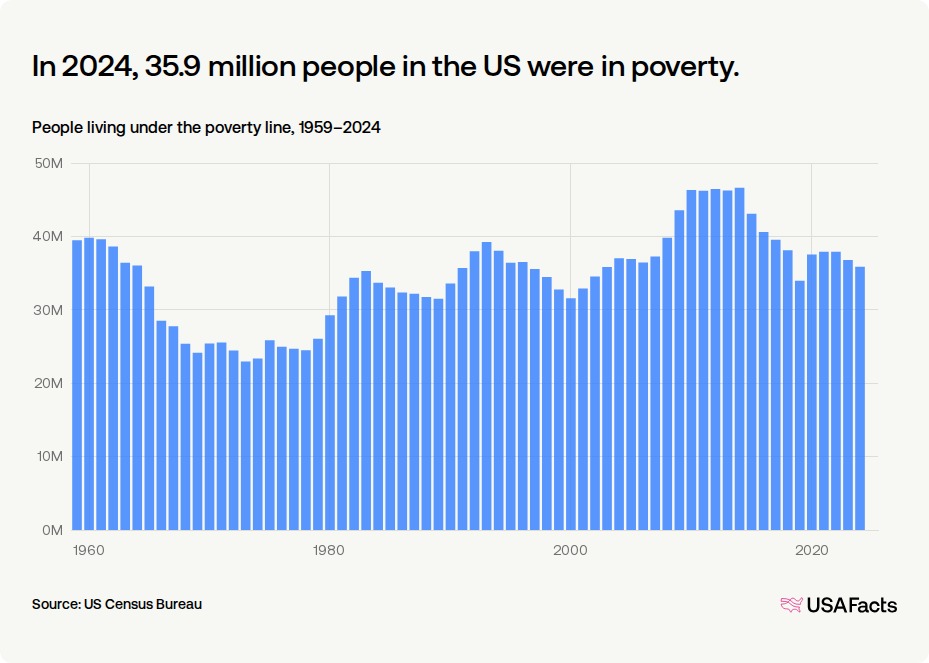
The poverty rate shows overall trends, but the total number of people also matters; many aid programs and funding decisions are based on the number of people in poverty, not the percentage. In 2025, that was 34.5 million people, down 26% from the 2014 peak of 46.7 million.
In 2025, 34.5 million people in the US were in poverty.
People living under the poverty line, 1959–2025
What is the child poverty rate?
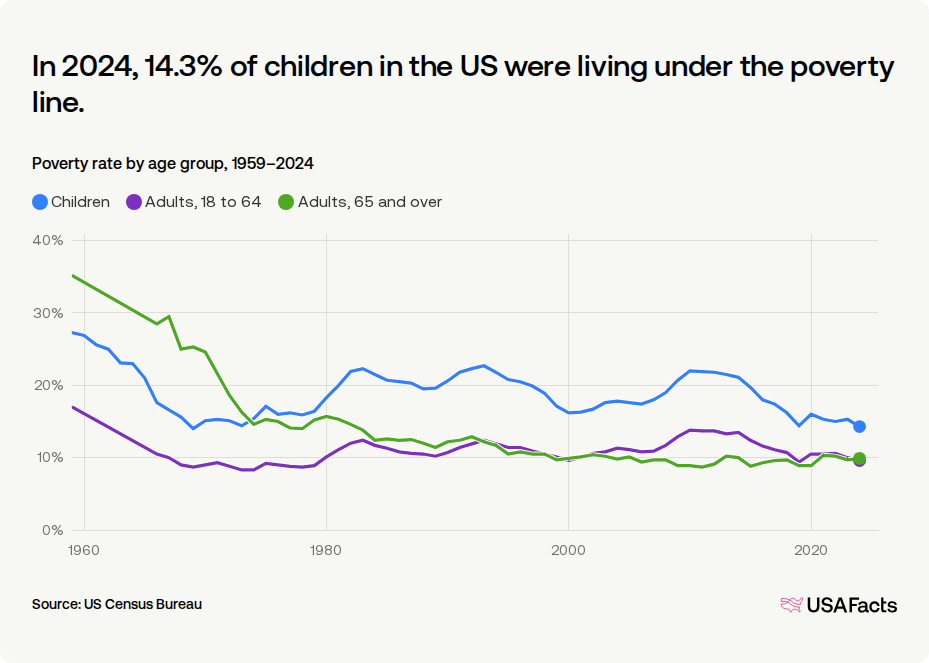
The poverty rate for children under 18 decreased from 14.4% to 13.4% between 2024 and 2025. During the same period, the poverty rate for adults under 65 decreased from 9.6% to 9.2% and decreased from 9.9% to 9.8% for over-65s.
In 2025, 13.4% of children in the US were living under the poverty line.
Poverty rate by age group, 1959–2025
How does poverty differ by family characteristics?
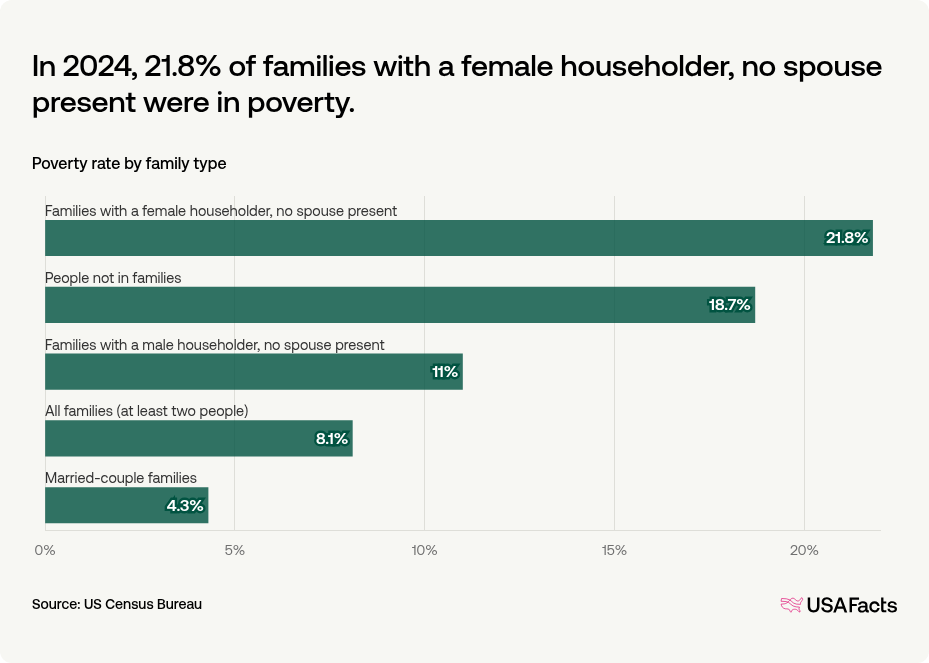
Poverty rates also vary by family type — single-parent families, married couples, and individuals living alone all deal with different economic circumstances. In 2025, 20% of families led by a female householder with no spouse present lived in poverty, while only 4.1% of married-couple families did.
In 2025, 20% of families with a female householder, no spouse present were in poverty.
Poverty rate by family type
How does poverty differ by race?
Looking along racial and ethnic lines shows more discrepancies. In 2025, 17.3% of the Black population lived under the poverty line, more than any other racial or ethnic group and more than the White, not Hispanic population’s 7.5%.
In 2025, 17.3% of the Black population was living under the poverty line.
Poverty rate by race and ethnicity, 2002–2025

What states have the highest and lowest poverty rates?
Data from the American Community Survey, a US Census Bureau project and a different source than the national-level data here, shows a range of poverty rates at the state level. Louisiana residents have the highest poverty rate at 18.1% in 2025, and New Hampshire had the lowest at 6.2%.
In 2025, Louisiana had the highest poverty rate at 18.1%.
Poverty rate
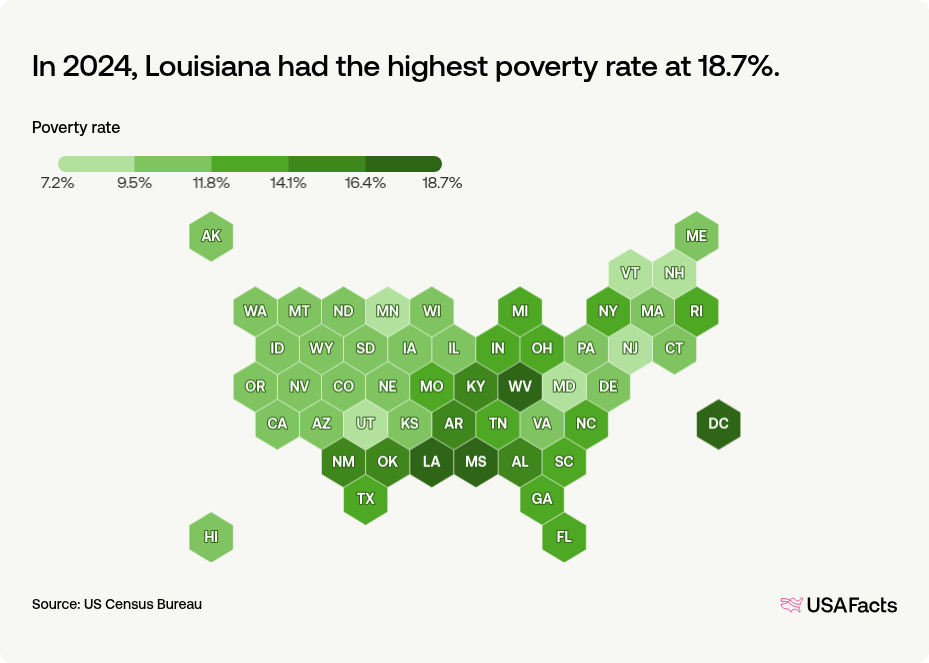
Poverty rate, by state (2025)
| 1. | Louisiana | 18.1% |
| 2. | Mississippi | 18% |
| 3. | West Virginia | 16% |
| 4. | Kentucky | 15.9% |
| 5. | District of Columbia | 15.9% |
| 6. | New Mexico | 15.5% |
| 7. | Arkansas | 15% |
| 8. | Alabama | 14.7% |
| 9. | Oklahoma | 14.4% |
| 10. | New York | 13.8% |
Keep exploring

Methodology
USAFacts standardizes data, in areas such as time and demographics, to make it easier to understand and compare.
Page sources
USAFacts endeavors to share the most up-to-date information available. We sourced the data on this page directly from government agencies; however, the intervals at which agencies publish updated data vary.
