Federal budget definition
The federal budget is the government’s yearly plan that outlines what it will spend, how it will pay for it, and whether it ends in surplus or deficit.
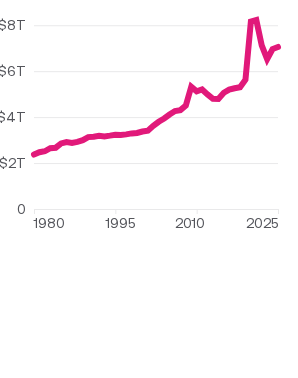
The federal budget is the US government’s detailed financial plan for one fiscal year (October 1-September 30). It specifies how much the government will spend, how it will fund that spending, and whether it will run a surplus or a deficit. It’s both a financial plan and a policy statement that reflects national priorities through the allocation of roughly $6 to $7 trillion annually.
The federal budget includes mandatory spending (which is required by existing laws like Social Security), discretionary spending (which requires annual congressional approval), and interest on the national debt. It details how the government will collect money (primarily through income taxes) and how it will spend that money.
The budget process formally begins with proposals from federal agencies, which are compiled by the Office of Management and Budget (OMB) and submitted to Congress by the president. Congress then debates, amends, and passes the budget through appropriations bills, which the President must sign into law. Creating and approving the federal budget typically takes over a year.
Who runs the federal budget?
Multiple branches of government, including:
- The president, via OMB: OMB develops a budget proposal that ensures federal agency activities align with administration goals.
- Congress: The legislature holds the constitutional "power of the purse." It reviews, amends, and authorizes all spending.
- Congressional Budget Office: This independent entity within the legislative branch provides nonpartisan fiscal analysis and budget projections.

Federal finances


