What is the poverty rate in Maine?
Refreshed monthly
The poverty rate was about 9.9% of Maine’s population as of 2025. The poverty rate is the percentage of people whose household income falls below the poverty threshold set by the government. It measures the percentage of people in households that don’t earn enough to pay for basic needs like food, housing, and healthcare. In 2025, 135,800 people in Maine were considered in poverty.
9.9%
of the population (2025)
136K
people living under the poverty line (2025)
The state's poverty rate was 9.9% in 2025, the lowest based on data from the American Community Survey dating back to 2010. It was 0.7 percentage points lower than the previous year. Maine's poverty rate hit a peak in 2012 of 14.7%.
In 2025, 9.9% of Maine's population were living under the poverty line.
Poverty rate, 2010–2025

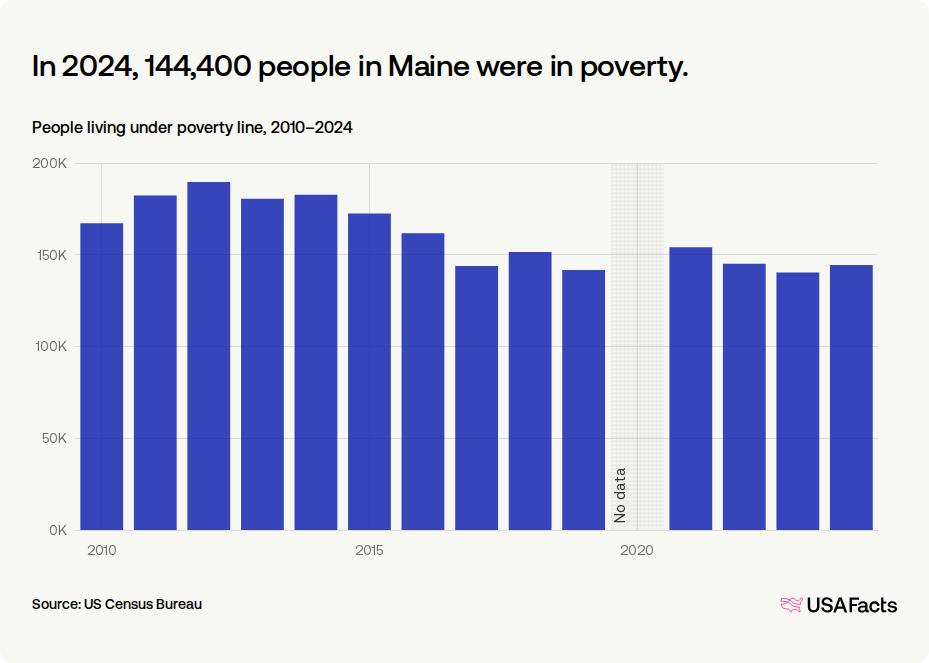
While the poverty rate shows the overall trend, the total number matters because many aid programs and funding decisions are based on how many people are in poverty, not just the percentage. In 2025, 135,800 people living in Maine were in poverty — down 28.4% from the 2012 peak of 189,800.
Get weekly insights
Subscribe for data-driven insights. No spin, just the facts.
In 2025, 135,800 people in Maine were in poverty.
People living under poverty line, 2010–2025
Poverty doesn’t affect all groups equally. Rates vary widely by demographic group, family type and location.
What is the child poverty rate in Maine?
From 2015 to 2025, the poverty rate for children under 18 in Maine decreased from 17.4% to 10.7%. During the same period, the poverty rate for adults under 65 years decreased from 13.5% to 9.7%. For those older than 65, the poverty rate increased from 8.8% to 9.9%.
In 2025, 10.7% of children in Maine were living under the poverty line.
Poverty rate by age group, 2015–2025

How does poverty differ by race in Maine?
Among racial or ethnic groups in Maine during 2025, five had a higher poverty rate than the state’s overall rate: American Indian and Alaska Native; Black or African American; Hispanic or Latino origin (of any race); some other race; and two or more races
One had a lower than average poverty rate: White alone, not Hispanic or Latino.
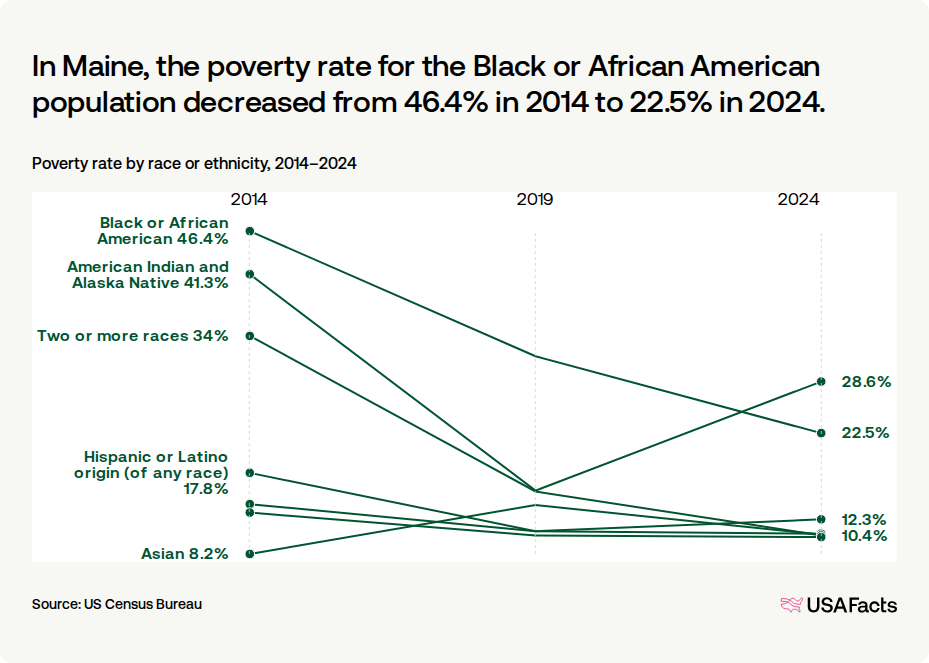
Over the previous ten years, the poverty rate for the Black or African American population shifted the most, decreasing from 42.9% in 2015 to 17.3% in 2025.
In Maine, the poverty rate for the Black or African American population decreased from 42.9% in 2015 to 17.3% in 2025.
Poverty rate by race or ethnicity, 2015–2025
What counties in Maine have the highest and lowest poverty rates?
In 2020–2024, the poverty rate among Maine counties ranged from 7.3% in Cumberland County to 17.1% in Washington County. The poverty rate in the state’s largest county — Cumberland County — was 7.3%
In 2020-2024, the poverty rate among Maine counties ranged from 7.3% to 17.1%.
Poverty rate

Poverty rate, by county (2024)
| 1. | Washington County | 17.1% |
| 2. | Piscataquis County | 15.5% |
| 3. | Androscoggin County | 14.4% |
| 4. | Aroostook County | 14.4% |
| 5. | Somerset County | 14.2% |
| 6. | Penobscot County | 14.1% |
| 7. | Oxford County | 13.8% |
| 8. | Franklin County | 12.2% |
| 9. | Waldo County | 12.0% |
| 10. | Kennebec County | 11.6% |
Keep exploring

Methodology
USAFacts standardizes data, in areas such as time and demographics, to make it easier to understand and compare.
Page sources
USAFacts endeavors to share the most up-to-date information available. We sourced the data on this page directly from government agencies; however, the intervals at which agencies publish updated data vary.
