What is a B1/B2 visa?
6.5M
59.2%
A B1/B2 visa covers the purposes of both the B1 and B2 visas. The B1 visa is for business-related activities including attending meetings, conferences, or negotiating contracts. The B2 visa is for tourism, vacation, visiting family and friends, or receiving medical treatment.
The length of stay for a B1/B2 visa is typically up to six months, as determined by Customs and Border Protection, and may be extended as long as the recipient complies with visa conditions.
What type of visa is a B1/B2 visa?
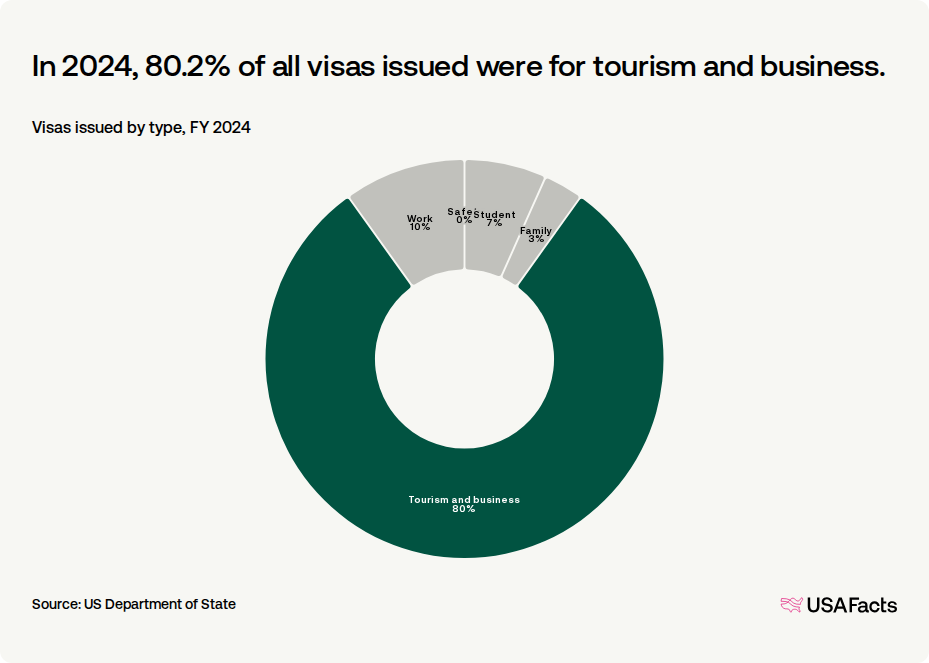
In 2024, 80.2% of all visas issued were for tourism and business.
Visas issued by type, FY 2024
How many B1/B2 visas are issued?
Get weekly insights
Subscribe for data-driven insights. No spin, just the facts.
The State Department does not maintain a cap on B1/B2 visas.
The US issued 6.5 million B1/B2 visas in 2024, up 15.1% from 2013.
Total B1/B2 visas issued, FY 2013–2024

- Is deemed ineligible for the category
- Has a communicable disease or any illness that could pose a threat to safety
- Has been convicted of certain crimes
- Has been previously removed from the US
- Is a practicing polygamist
- Submitted an incomplete application
B1/B2 visa applications were less likely to be accepted compared to all visas in 2024.
Visa acceptance rate, B1/B2 visas and all visas, FY 2013–2024

Who comes to the US on a B1/B2 visa?
- Brazil (1,114,612)
- India (898,754)
- China (645,977)
- Colombia (437,463)
- Argentina (272,762)
In 2024, the most B1/B2 visa recipients were from Brazil.
B1/B2 visas issued by recipient’s home country, FY 2024

- Saint Kitts and Nevis (62 per 1,000 people)
- Dominica (40)
- Trinidad and Tobago (38)
- Barbados (37)
- The Bahamas (36)
Keep exploring

Methodology
USAFacts standardizes data, in areas such as time and demographics, to make it easier to understand and compare.
Page sources
USAFacts endeavors to share the most up-to-date information available. We sourced the data on this page directly from government agencies; however, the intervals at which agencies publish updated data vary.

