Which US cities have the largest homeless populations?
In 2025, over a quarter of people experiencing homelessness in the US were concentrated in two major cities: New York, NY, and Los Angeles, CA.
About 745,652 people were experiencing homelessness in the US in January 2025, according to Department of Housing and Urban Development (HUD) data.
HUD divides the US into 386 continuums of care, groups of service agencies — nonprofits, hospitals, law enforcement, mental health providers, and many more — responsible for coordinating homelessness services in a particular area. A continuum can cover a city, a city and county (e.g., Spokane County in Washington, which includes the city of Spokane), or a group of rural areas.
In 2025:
- 48 continuums included major cities
- 64 were largely urban but without a major city
- 160 were largely suburban
- 114 were largely rural
About 52% of the nation’s homeless people lived in the continuums containing the 50 biggest cities.
Get weekly insights
Subscribe for data-driven insights. No spin, just the facts.
Which cities had the largest homeless populations in 2025?
Among urban and suburban continuums, the largest homeless populations were in the CoCs containing New York City (125,683) and Los Angeles (67,777), which were also the two most populous cities in the US.
New York City and Los Angeles have the largest homeless populations in the US.
City, suburban, or urban continuums of care with the largest homeless populations, 2025

In 2025, seventeen urban or suburban continuums identified at least 5,000 homeless individuals each.
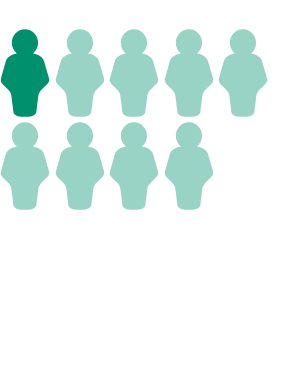
Numbers aside, people experience homelessness differently in each location: 34.5% of LA’s homeless population was sheltered either in an emergency shelter, transitional housing, or a safe haven program, compared to 96.3% of New York’s unhoused.
Six major US cities each have homeless populations of 10,000 or more.
Total homeless populations for all major city continuums of care, 2025

Seven of the top 10 major-city continuums with the highest proportions of unsheltered homeless people were in California, all with more than 55%:
- Long Beach (Long Beach CoC): 71.4% unsheltered
- San Jose/Santa Clara (San Jose/Santa Clara City & County CoC): 69.8%
- Oakland, Berkeley (Oakland, Berkeley/Alameda County CoC): 68.5%
- Los Angeles (Los Angeles City & County CoC): 65.5%
- Fresno (Fresno City & County/Madera County CoC): 62.0%
- San Diego (San Diego City and County CoC): 57.7%
- Sacramento (Sacramento City & County CoC): 56.4%
The leading cities for sheltered homelessness all had more than 90% of their homeless populations in shelters:
- Boston (Boston CoC): 97.6%
- New York City (New York City CoC): 96.3%
- Milwaukee (Milwaukee City & County CoC): 94.6%
- Memphis (Memphis/Shelby County CoC): 93.3%
- Baltimore (Baltimore CoC): 90.7%
Annual homelessness counts occur during January, so cities in colder climates have generally tended to have higher proportions of sheltered people.
How have homelessness counts changed in recent years?
HUD estimates that the number of unhoused people in shelters rose 25.4% between 2023 and 2024, from 396,494 to 497,256. Since 2024, the number of people in shelters has declined 3.6% to 479,332, representing 64.3% of the total unhoused population.
The number of unsheltered people increased 6.9% between 2023 and 2024, from 256,610 to 274,224. As of January 2025, 55.6% of the unhoused population (266,320 people) were unsheltered, a 2.9% decrease from the previous year.
Where does this data come from?
Where does this data come from?
This data comes from the Office of Community Planning and Development, a division of the Department of Housing and Urban Development. Each year, the office releases “The 2025 Annual Homelessness Assessment Report (AHAR) to Congress”, which outlines the status of sheltered and unsheltered populations in the US.
Sheltered people are counted based on information from homeless services, such as emergency shelters and transitional housing.
Unsheltered numbers are compiled using point-in-time counts. Every January, each continuum conducts a count of unsheltered people. Each locality conducts its count differently, but most cities estimate totals using data from a sample of locations where people experiencing homelessness congregate.
Learn more about homelessness rates by state, what the federal poverty level is, and get the facts every week by signing up for our newsletter.

Keep exploring
- How many homeless people are in the US? What does the data miss? - Of the 745,652 people experiencing homelessness in January 2025, white adults ages 35 to 44 represented the largest demographic group.
- Which states have the highest and lowest rates of homelessness? - New York and Oregon have the highest US homelessness rates. Over five years, rates rose in all but four states and Washington, DC.
- How is the standard of living changing for veterans? - Veterans in the US earn higher incomes and have lower unemployment and poverty rates than the general population.
- More than half a million US households live with plumbing poverty - Census data shows plumbing poverty — the lack of access to running water and/or an indoor bath or shower — heavily impacts native populations.
