Why are accidental deaths rising?
The rise in accidental deaths in the US is being driven by synthetic opioid overdoses, like fentanyl, and falls by an aging population.
Accidental deaths are the third leading cause of death in the United States. In fact, they’ve been the third leading cause of death since 2016, save for 2020 and 2021 when the nation grappled with the COVID-19 pandemic.
The accidental death rate has increased 56% since 2014.
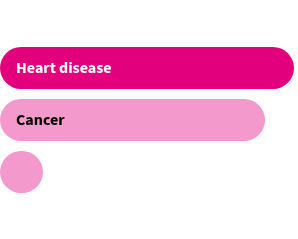
Accidents are the third leading cause of death in the US.
Top causes of death per 100,000 people, 1999–2023

The Centers for Disease Control and Prevention (CDC) classifies accidental deaths to include poisonings (including drug overdoses); falls; motor vehicle deaths; other transport-related deaths (such as boat or other watercraft incidents, aircraft and spacecraft crashes, railway deaths, and similar events); and other non-transport accidents, such as unintentional firearm discharges, drowning, or exposure to smoke, fire, and flames.
Poisonings and falls are the top accidental causes of death.
Accidental deaths by type per 100,000 people, 1999–2023

Why are accidental poisonings increasing?
More and more people are dying from accidental poisoning, particularly drug overdose deaths involving fentanyl.
From 1999 to 2013, the rate of fentanyl and synthetic opioid overdose deaths was at or below 1 per 100,000 people. In 2014, the rate nearly doubled to 1.8 deaths per 100,000 and continued to rise annually until 2022, when it peaked at 22.7. It declined slightly in 2023 to 22.2, the first decrease since 2011.
Compare that to 2023’s overall accidental poisoning death rate, which was 29.9 deaths per 100,000.
Fentanyl and other synthetic opioids cause more than twice as many deaths as any other drug.
Drug-involved overdose deaths by drug, age-adjusted rate per 100,000 people, 1999–2023

Other drug overdoses have also increased since 2013: cocaine overdoses increased fivefold, and methamphetamine overdoses increased nearly ninefold.
The rate of drug overdoses has increased across all drugs since 1999. The CDC says about 93% of drug overdose deaths are unintentional.
Do falls really kill more people than motor vehicle accidents?
The crude rate of deaths from falls is higher than the crude rate of deaths from motor vehicle accidents. Adjust for age, however, and the picture is different: motor-vehicle-related deaths are higher.
Adjusted for age, motor vehicle deaths are more common than deaths from falls.
Crude and age-adjusted accidental deaths per 100,000 people, 1999–2023

This happens because crude rates reflect the real age makeup of the population. Falls occur more frequently among older adults. And in 2023, individuals ages 65 and older accounted for 17.6% of the US population, contributing to a higher crude fall-death rate in this group.
Age-adjusted rates correct for this. The CDC calculates age-adjusted rates by applying standard weights to each age-specific death rate. This removes differences in age structure.
After adjusting both causes of death to the same standard age distribution, the trend shifts: the rate of motor-vehicle-related deaths exceed fall-related deaths once age differences are accounted for.
Learn more about drug overdose deaths and the leading causes of death in the US, and get the data straight to your inbox by signing up for our weekly newsletter.

