Mandatory spending definition
Mandatory spending is set by law, not annual budgets. Congress must change the law to alter funding, benefits, or eligibility.
Mandatory spending, also called direct spending, is federal spending set by the laws that create programs rather than by the yearly appropriations process. For programs that fall under mandatory spending, the law either sets a funding amount or sets the eligibility rules and benefit formulas that decide what the government pays.
Mandatory program spending is typically permanent, so Congress does not have to set their spending levels each year.
To change what a mandatory program costs or who it benefits, Congress has to change the law behind it.
What is the difference between mandatory and discretionary spending?
Discretionary spending is funding provided in appropriations acts, mainly the 12 regular appropriations bills Congress takes up each year as part of the budget process. Congress sets those amounts annually through its Appropriations Committees.
Mandatory spending is not set that way. Mandatory spending levels follow a program’s eligibility rules and benefit formulas, so they rise and fall with the economy and with how many people qualify for the programs.
What are examples of mandatory spending?
Social Security, Medicare, and Medicaid are the three programs with the biggest mandatory spending. Spending for the Supplemental Nutrition Assistance Program (SNAP) and veterans’' disability compensation and pensions is also mandatory.
Some programs with spending, including Medicaid and SNAP, do get their funding through annual appropriations bills. It’s still considered mandatory because the amount is based on the benefit and eligibility rules already set in their laws.
Interest on the federal debt is sometimes counted as mandatory spending. The Congressional Budget Office reports it separately, as net interest.
How much of federal spending is mandatory?
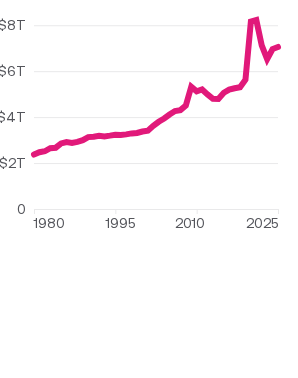
Federal spending in fiscal year 2025 included $4.2 trillion in mandatory spending, $1.9 trillion in discretionary spending, and $970 billion in net interest. More than half of the mandatory total went to Social Security and Medicare.
Mandatory spending has grown from about 30% of all federal spending in the early 1970s to about 60% in recent years. Discretionary spending moved the opposite way over that period, from 60% to 30%.

Keep exploring
- Discretionary spending definition - Discretionary spending funds federal agency operations and programs, with Congress setting funding levels each year through appropriations.
- How does the government budget process work? - Congress hasn't passed a full budget on time since 1997. How is the government getting funded?
- What are congressional appropriations (spending) bills and how are they approved? - Appropriation bills are proposed laws, put forth by 12 subcommittees, that authorize different government agencies to spend money.
- How much of the federal budget is mandatory spending? - In fiscal year 2023, around 60% of federal spending was mandatory spending.

