What is the gender pay gap in the US?
$0.81
24%
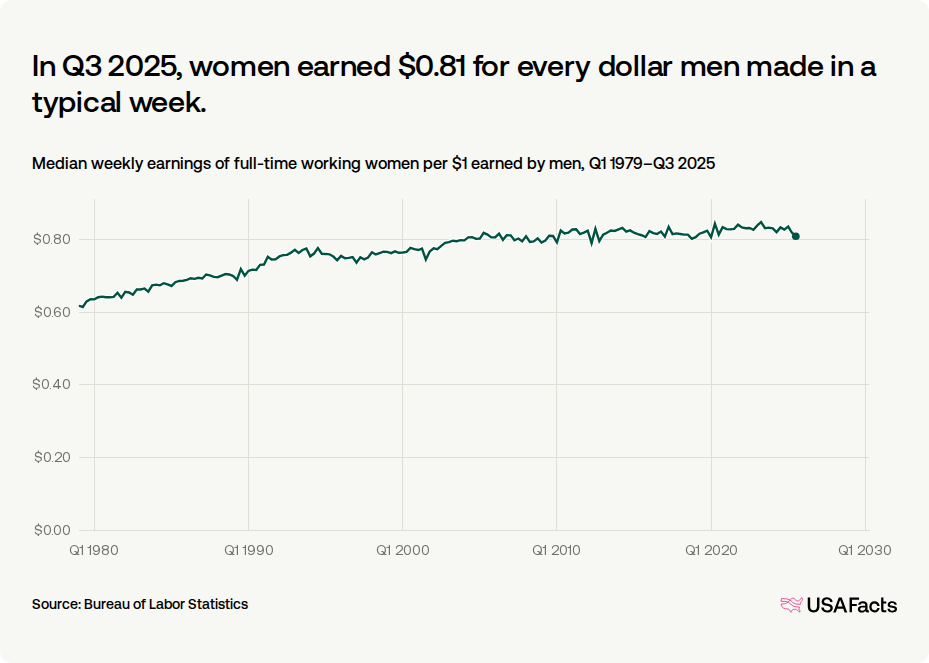
In Q3 2025, women earned $0.81 for every dollar men made in a typical week.
Median weekly earnings of full-time working women per $1 earned by men, Q1 1979–Q3 2025
How much less do women earn per week than men?
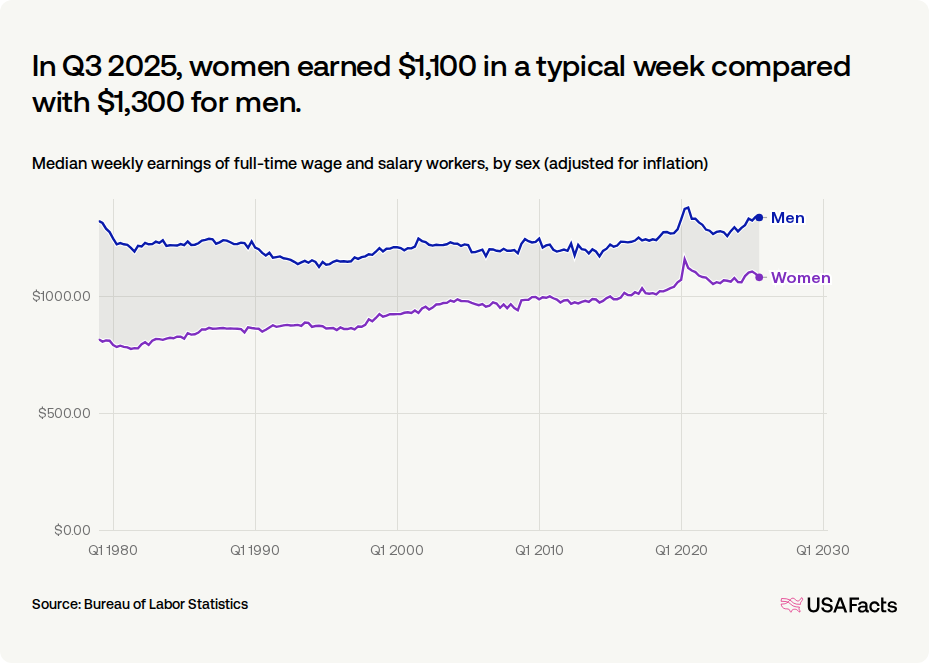
As of the third quarter of 2025, men working full time had median weekly earnings of $1,338, compared with $1,082 for women — a difference of $256.In Q3 2025, women earned $1,100 in a typical week compared with $1,300 for men.
Median weekly earnings of full-time wage and salary workers, by sex (adjusted for inflation)
Which industries have the biggest and smallest gender pay gap?
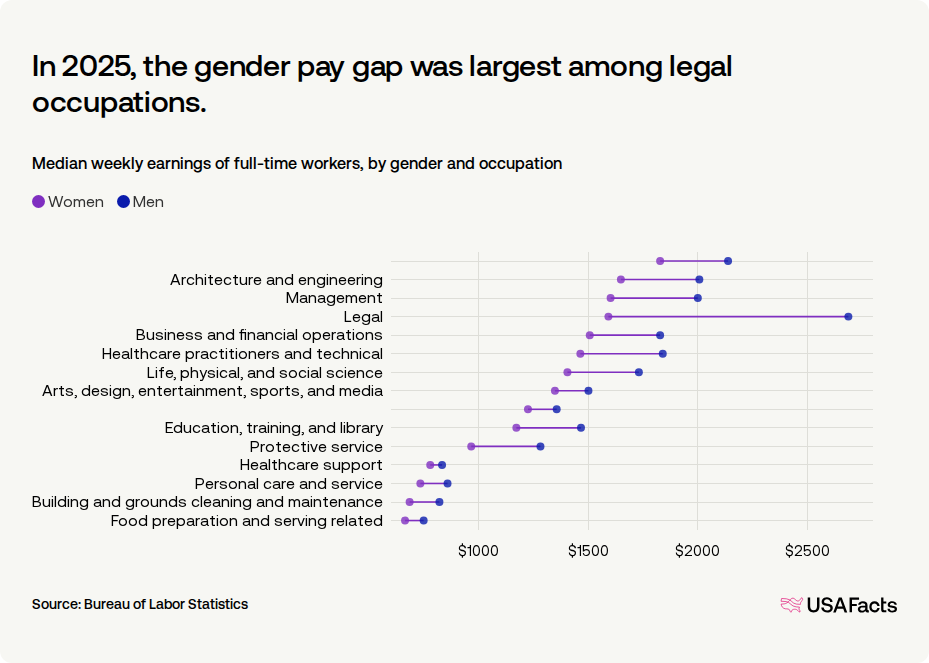
Part of the reason for the pay gap lies in the types of jobs men and women tend to hold. Within occupations, full-time working men earned more than women across all 15 categories tracked in the year 2025.In 2025, the gender pay gap was largest among legal occupations.
Median weekly earnings of full-time workers, by gender and occupation
How does the gender pay gap differ by state?
The gender pay gap also varies by state. In 2025, women in Vermont earned 93 cents for every dollar earned by men — the smallest gap in the nation. At the other end of the spectrum, women in Oklahoma earned 76 cents on the dollar, the widest gap of any state.Vermont had the smallest gender pay gap in 2025 — Oklahoma the largest.
Women’s median weekly earnings per $1 earned by men, by state (2025)

What is the gender pay gap among all workers, including part-time?
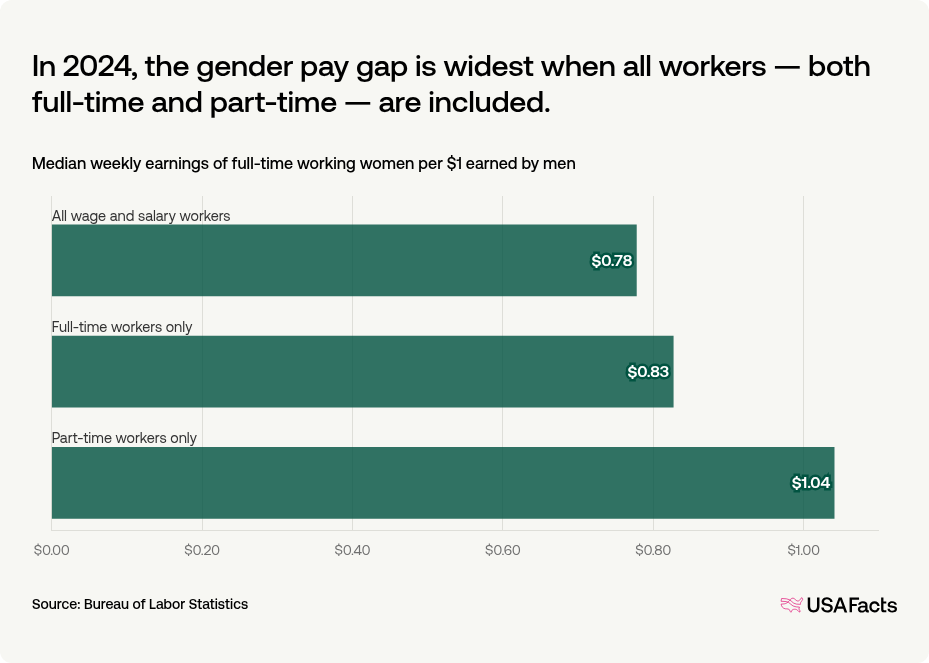
Comparing the pay of full-time workers only helps isolate differences among men and women working similar hours in the same period. But when all workers are considered — including part-time and part-year employees — the gender pay gap is wider. In 2025, women earned just 78 cents for every dollar earned by men.In 2025, the gender pay gap is widest when all workers — both full-time and part-time — are included.
Median weekly earnings of full-time working women per $1 earned by men
Keep exploring

Methodology
USAFacts standardizes data, in areas such as time and demographics, to make it easier to understand and compare.
The analysis was generated with the help of AI and reviewed by USAFacts for accuracy.
Page sources
USAFacts endeavors to share the most up-to-date information available. We sourced the data on this page directly from government agencies; however, the intervals at which agencies publish updated data vary.
