What is the average wage in the US?
Refreshed monthly
The average wage was $1,299 per week in August 2026, 0.3% higher than a year before. The average weekly wage, the typical earnings that employees bring home for one week of work, is a valuable indicator to assess economic conditions, labor market health, and wage trends.
$1.3K
average weekly earnings, August 2026
0.3%
higher than a year before (adjusted for inflation)
The Bureau of Labor Statistics releases monthly statistics tracking the wages of all non-government employees. In August 2026, the average weekly wage was $1,299. That represents the average wages of 135.8 million workers in different industries (excluding the government) and parts of the country.
Get weekly insights
Subscribe for data-driven insights. No spin, just the facts.
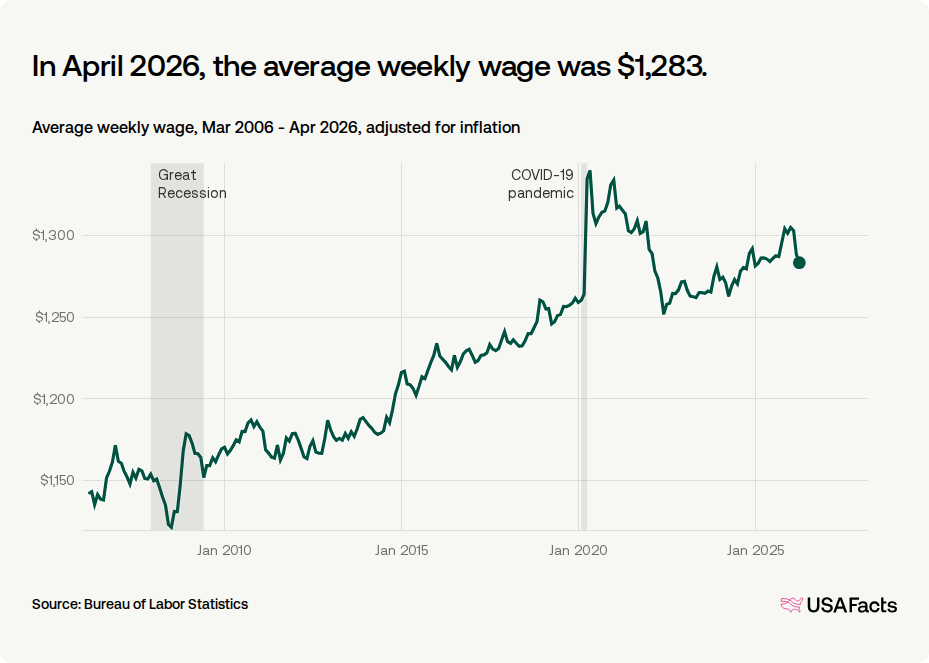
Wage levels are dependent on several factors, including labor demand and supply, inflation, and changes in workforce composition. Since the Great Recession, which ended in July 2009, the average weekly wage has generally increased, with a spike in 2020 at the start of the pandemic when a large number of low-wage workers lost their jobs. Higher-wage workers were less likely to be laid off in that period, causing the average weekly wage to jump.
In August 2026, the average weekly wage was $1,299.
Average weekly wage, Mar 2006 - Aug 2026, adjusted for inflation
Which occupations have the highest wages?
As with other averages, most people earn more or less than the average weekly wage. Pay varies based on industry and occupation.In August 2026, workers in the Information sector had the highest average weekly earnings at $2,066 per week. Leisure and hospitality workers had the lowest at $603 per week.
In August 2026, the information sector had the highest average wage among various industries.
Average weekly wage by economic sector, August 2026

Which states have the highest and lowest wages?
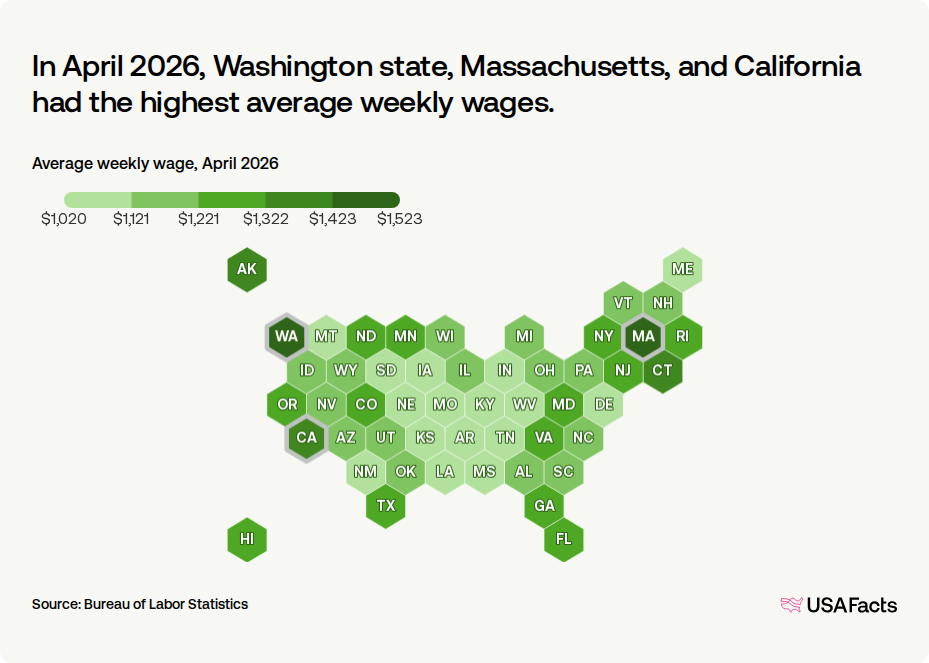
Wages also vary by state. In July 2026, the latest month for which state-level data is available, Washington had the highest average weekly wage at $1,504 per week and Mississippi’s was the lowest at $1,029.In July 2026, Washington state, Massachusetts, and Alaska had the highest average weekly wages.
Average weekly wage, July 2026
Cost of living, which also varies based on location, impacts how far a person’s wages go. Someone earning the weekly average would have more purchasing power — the amount their money can actually buy — in states with lower costs of living like Arkansas, Mississippi, and Iowa instead of those with the highest, such as California, Hawaii, and New Jersey.
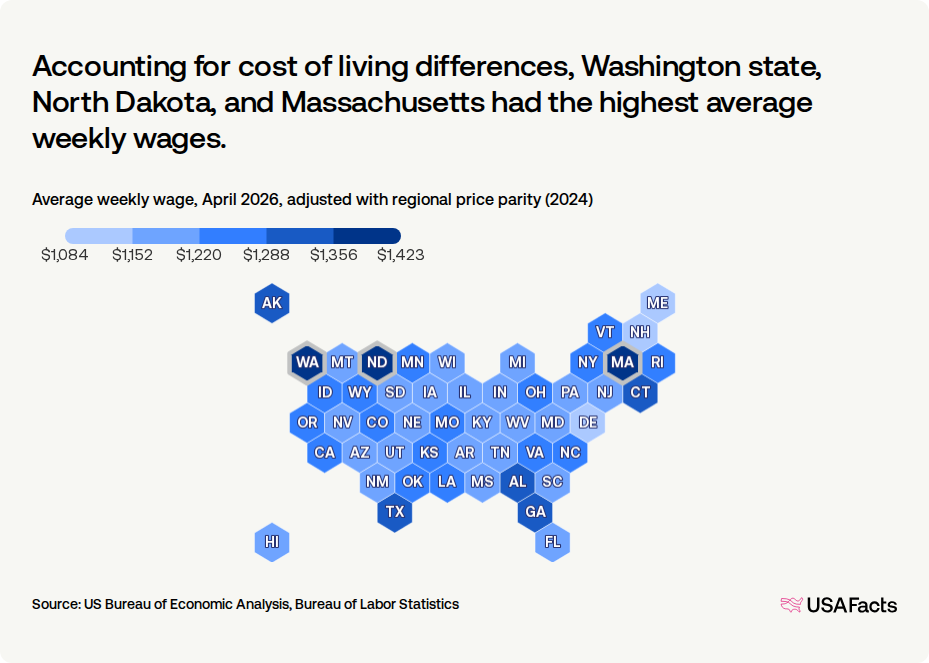
Adjusting for regional cost of living differences, North Dakota has the highest average weekly wage at $1,460. Delaware has the lowest at $1,086 per month.
Accounting for cost of living differences, North Dakota, Washington state, and Alaska had the highest average weekly wages.
Average weekly wage, July 2026, adjusted with regional price parity (2024)
Keep exploring

Methodology
USAFacts standardizes data, in areas such as time and demographics, to make it easier to understand and compare.
Page sources
USAFacts endeavors to share the most up-to-date information available. We sourced the data on this page directly from government agencies; however, the intervals at which agencies publish updated data vary.

